Core Drilling - Payless Concrete Sawing
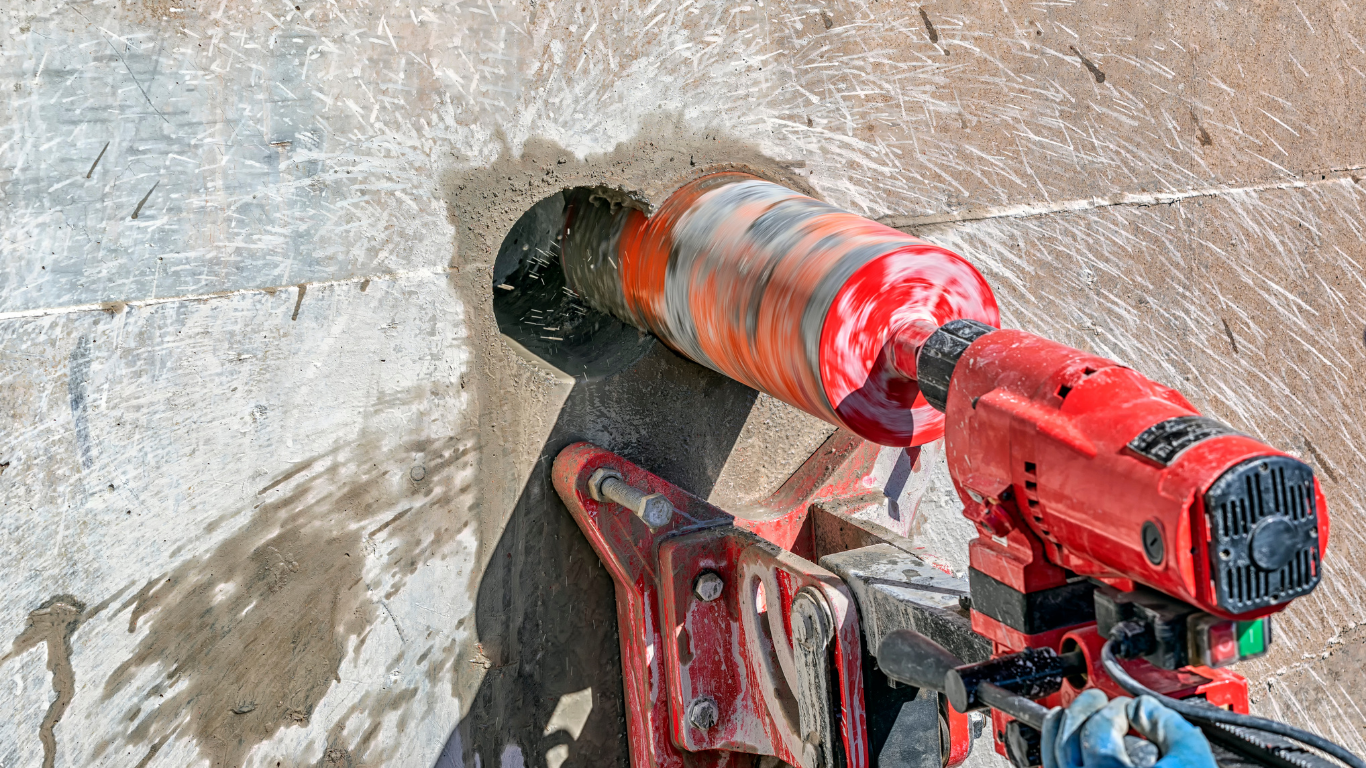
Core drilling creates circular openings through concrete, masonry, and asphalt using diamond-core bits. Payless Concrete Sawing provides precision core drilling services for mechanical, electrical, plumbing, HVAC penetrations, anchor installations, and sampling. Based in Castroville and serving Monterey County and the Central Coast, our team delivers clean, accurately sized cores with minimal disruption to adjacent structures and finishes.
Why core drilling matters
Core drilling is the preferred method for creating openings where accuracy, clean edges, and limited disturbance are critical. Unlike chiseling or jackhammer methods, diamond-core drilling yields round, true holes that fit pipes, conduits, ducts, and anchors without additional finishing. Core drilling minimizes chipping and spalling and allows precise control over hole diameter, depth, and alignment.
Core drilling services we provide
Small-diameter cores
For electrical conduit, small plumbing penetrations, and anchor bolt holes.
Large-diameter cores
For ductwork, plumbing stacks, large mechanical penetrations, and structural anchorages.
Through-wall and through-floor drilling
Vertical and horizontal cores for multi-level routing of utilities.
Deep cores
For bridges, deep slabs, and thick foundations requiring specialized rigs.
Hole restoration
Cutting to size and making ready for sleeve installation or through-penetration sealing.
Typical applications
Installing plumbing stacks, gas lines, and water supply penetrations
Creating openings for HVAC ducts and rooftop curb penetrations
Core sampling for concrete testing and material analysis
Anchor holes for structural bolting and heavy equipment anchorage
Conduit and cable penetrations for electrical and communications systems
Advantages of professional core drilling
Precision: Cores are sized to tolerance for easy installation of sleeves, pipes, and conduits.
Reduced structural impact: Limited vibration and minimal chipping protect adjacent rebar and finishes.
Clean edges: Allows direct installation of sleeves and seals without major patching.
Speed: Efficient drilling reduces downtime and coordination delays for follow-on trades.
Versatility: Drills can reach difficult orientations (overhead, floor-to-floor, vertical wall, or horizontal slabs) with specialized rigs and supports.
How we approach core drilling projects
Scope review
We evaluate required hole sizes, depths, and orientations from drawings or site photos.
Structural coordination
For penetrations close to structural members or reinforcements, we coordinate with engineers to confirm location and method.
Access and logistics
We verify access to the drill location, overhead clearances, and necessary safety measures for elevated work.
Equipment selection
We select hand-held core drills, rig-mounted drills, or pneumatic/hydraulic systems based on diameter and depth requirements.
Dust and slurry control
We implement wet drilling and vacuum containment for indoor work and slurry management procedures for outdoor work.
Execution and verification
We drill to the specified diameters and depths and verify size and alignment before clearing the opening for the next trade.
Contact
To request core drilling for plumbing, electrical, HVAC, anchors, or testing cores, call Payless Concrete Sawing at (831) 498-6355. Share hole sizes, depths, and site photos to receive a prompt estimate and drilling plan.
Contact Us
We will get back to you as soon as possible.
Please try again later.
Technical considerations
Bit selection: Diamond-core bit selection depends on aggregate hardness, reinforcement, and desired hole finish.
Anchors and sleeves: We accommodate sleeve installation and can core to specific allowances for sealing systems and sleeves.
Reinforcement: When rebar is encountered, the core bit cuts through steel cleanly, but extra planning is done for heavily reinforced areas.
Hole alignment and plumb: For multi-level mechanical systems, we ensure vertical alignment and layout accuracy.
industries we serve
Commercial construction and tenant improvements
Industrial facilities and plant upgrades
Public works and municipal infrastructure
Residential renovation and foundation modifications
Mechanical, electrical, and plumbing contractors requiring precise penetrations
Quality control and documentation
We record hole sizes, depths, and locations. Photos and layout verification can be provided for project records. For holes requiring core cut tolerances for engineered systems, we work directly with engineers and contractors to document acceptability.
Frequently asked questions (FAQs)
Q: What sizes of cores can you drill?
A: We drill small to very large diameters, subject to rig capacity. From one-inch to multi-foot diameters, we select appropriate equipment. Provide required diameters and depths for accurate confirmation.
Q: Is core drilling noisy?
A: Core drilling produces noise but is generally faster and less disruptive than alternative methods. For interior or noise-sensitive sites, we schedule work during off-hours if necessary.
Q: Can you core drill at an angle or through curved surfaces?
A: Yes—angled cores and drilling through curved or vertical surfaces are possible using rig fixtures and anchors to ensure stability and alignment. Provide project details for a feasibility assessment.
Q: What about sealing penetrations after drilling?
A: We can coordinate with contractors for sleeve installations and sealing systems (firestopping, water-tight sleeves, etc.). We focus on providing clean, accurate openings that simplify final sealing work.